


An evolving role
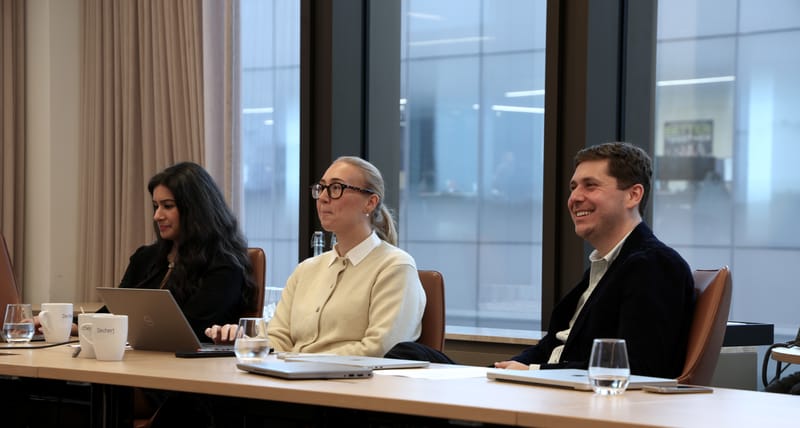
As designers, we embed deeply within client teams, sitting alongside operators, engineers, and leadership to understand how work actually happens. Designers are uniquely effective in ambiguous environments because they are trained to turn unclear problems into tangible systems quickly. In the context of AI, this proximity becomes essential. The most valuable opportunities rarely appear in a requirements document. They emerge through observation, experimentation, and constant iteration inside the organization itself.

A new opportunity for design
The Forward Deployed Designer is a response to how AI is changing product development inside enterprises. Most organizations know AI will impact their workflows, but very few know where to begin or how to apply it meaningfully. At the same time, the pace of new models, tools, and interfaces is changing almost weekly. This requires a new kind of role: someone constantly testing new capabilities, understanding the state of the technology, and translating that into practical systems for teams. Often the value is not inventing something entirely new, but identifying the right tool, workflow, or interaction model at the right moment and applying it in context.
In practice
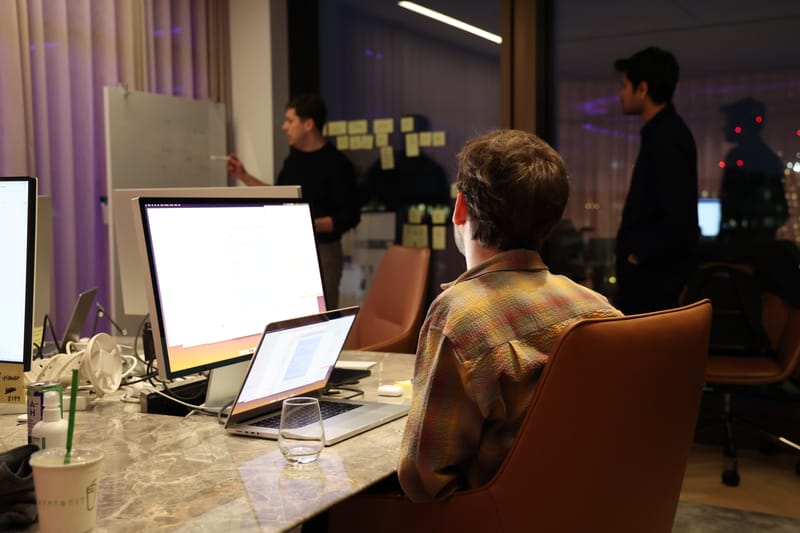
Traditionally, consultants and designers would enter organizations to conduct research, map workflows, and deliver recommendations. Today, the loop is much shorter. Forward Deployed Designers work directly inside operational environments, rapidly building and testing software alongside the teams using it. New tools like Claude Code, Lovable, and V0 make it possible to prototype fully interactive systems in days instead of months. This changes the role fundamentally. Instead of presenting concepts or static deliverables, designers can validate ideas through working software, iterate in real time, and uncover opportunities that only become visible once a solution is placed directly into a workflow.
Looking forward
The biggest difference with the Forward Deployed Designer model is that it accepts the reality that most organizations are entering unfamiliar territory. Teams know they need to adopt AI, but the path forward is often unclear. In these environments, the ability to make ideas tangible quickly becomes critical. Rather than applying pre-packaged solutions from a distance, Forward Deployed Designers work from inside the organization, helping teams navigate ambiguity through rapid prototyping, direct collaboration, and continuous iteration. The goal is not simply to deploy software, but to build confidence, uncover leverage points, and create systems that naturally integrate into how people already work.